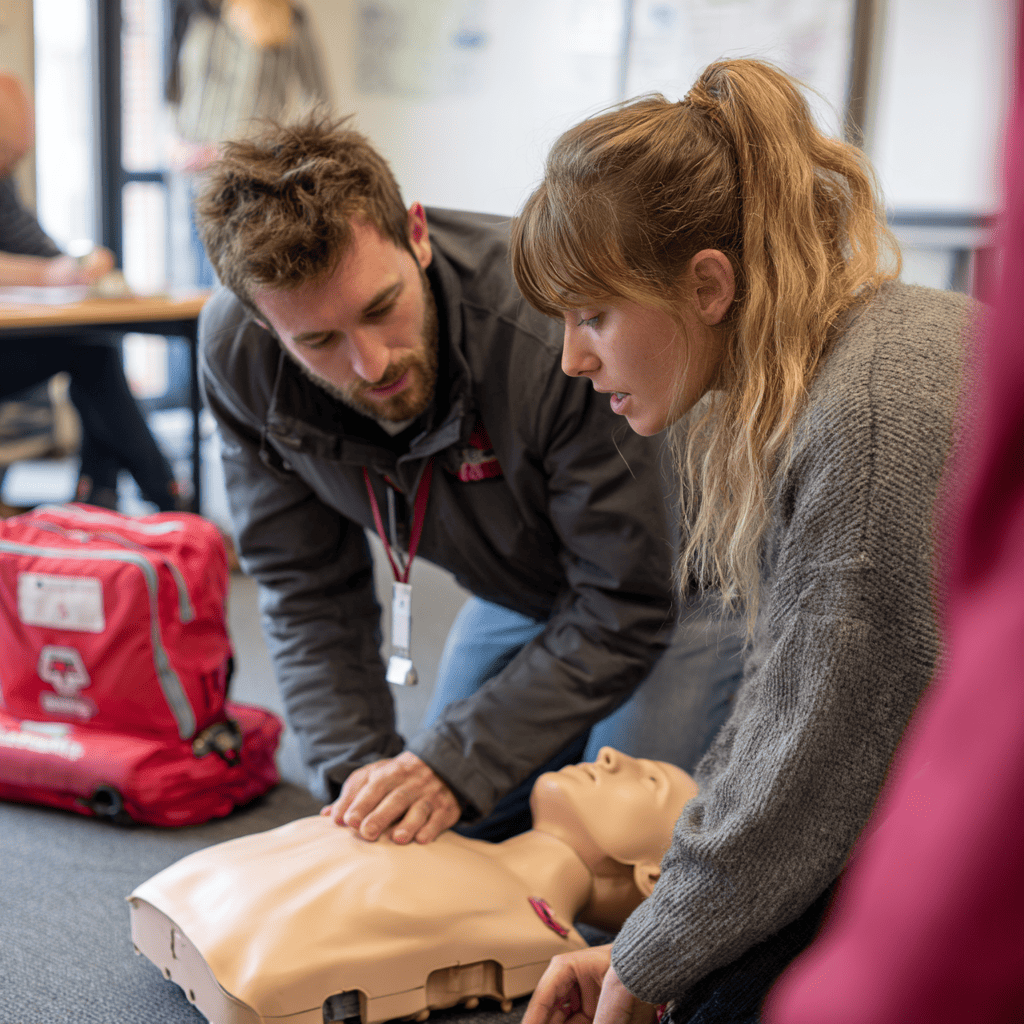
There is a special kind of magic that happens when a family learns something new together. Not the forced togetherness of a rainy afternoon board game, but the genuine, heart-deep connection that comes from shared purpose and mutual empowerment. Imagine a household where parents and older children alike know exactly what to do if a toddler chokes on a grape, if grandma feels faint after gardening, or if a bike accident leaves someone bleeding. That is not a stressful scenario—it is a peaceful one. And that peace begins with a single, positive decision. Whether you search for First Aid courses Salford or a class in your own neighborhood, gathering your loved ones to learn lifesaving skills transforms your home from a place of worry into a fortress of calm, capable connection.

 Most parents spend countless hours worrying. Is the baby proofing sufficient? Will the babysitter remember the allergy medicine? What if someone falls off the climbing frame? That worry is exhausting, and it steals joy from ordinary days. But here is the beautiful truth: worry dissolves when competence arrives. When every capable member of your family knows how to respond in an emergency, the background noise of fear simply fades away. What remains is something far sweeter: confidence, connection, and the quiet pride of knowing your family has each other’s backs.
Turning Fear Into Family Fun
Let us reframe how we think about first aid. Instead of imagining a grim classroom with dummies and dreary slideshows, picture a weekend afternoon where your family practices rolling each other into the recovery position while laughing. Picture teenagers competing to see who can apply the most realistic bandage. Picture younger children practicing how to dial emergency services and say, “My address is…” with clear, proud voices.
First aid training does not have to be somber. In fact, the best family courses are interactive, positive, and even joyful. They turn scary what-ifs into empowering watch-me-do-this moments. And when learning feels like play, the skills stick. More importantly, the memory of learning together becomes a treasured family story.
One mother who took a family first aid class with her two teenagers described it this way: “For years, I carried all the worry alone. After our course, my sixteen-year-old son looked at me and said, ‘Mom, I’ve got this. If anything happens, I know what to do.’ I cried happy tears. The weight I had been carrying alone suddenly felt shared.”
That is the gift of learning together. You stop being the sole guardian and become a team of protectors.
Age-Appropriate Skills For Every Family Member
One concern parents often have is whether first aid is appropriate for children. The answer is a resounding yes—with the right approach. A quality family first aid course adapts skills to different age groups, ensuring everyone feels capable rather than overwhelmed.
Young children (ages 5–9) can learn to recognize emergencies, shout for help, and dial emergency numbers. They can practice saying, “My mom is not waking up” or “My dad is bleeding” in a clear voice. These simple skills save lives because a calm child who can call 999 or 911 is a miracle in a crisis.
Teenagers (ages 10–17) can learn CPR, choking rescue, bleeding control, and how to use an AED. Many teens have saved parents, siblings, or grandparents precisely because they took a first aid course. Teenagers are often the most enthusiastic learners—they love feeling trusted and capable.
Adults and seniors reinforce their existing knowledge while learning new techniques like stroke recognition, allergic reaction response, and heat exhaustion treatment. When multiple generations learn together, everyone benefits from shared vocabulary and shared confidence.
The result? A home where no single person carries all the responsibility. A home where a twelve-year-old can help a younger sibling, and a grandparent can assist an adult child. That is not just first aid. That is family resilience.
The Deeper Connection: Why Shared Learning Bonds Hearts
There is something profoundly connecting about practicing emergency scenarios together. When you take turns being the “rescuer” and the “victim,” you build trust in a way that everyday conversation never achieves. You look into each other’s eyes during roleplay. You practice speaking calmly while your heart races. You debrief afterward with gentle feedback and encouragement.
These moments create emotional glue. Families who train together report feeling more patient with each other, more protective of each other, and more openly affectionate. Why? Because first aid practice requires vulnerability. You admit what you do not know. You ask for help. You celebrate small victories. And that vulnerability, shared in a safe environment, deepens love.
Moreover, children who learn first aid grow into teenagers and adults who do not freeze in emergencies. They become the calm friend at a party, the helpful coworker, the neighbor who runs toward trouble instead of away from it. That character trait—quiet, capable courage—is one of the most beautiful gifts a parent can give. And it starts with a single afternoon of family training.
Peace Of Mind That Changes Daily Life
Here is the most underrated benefit of family first aid training: the end of low-grade parental anxiety. Parents who know their children can respond to emergencies sleep better at night. They let their teenagers walk to the store alone with less fear. They host birthday parties without secretly panicking about choking hazards.
That peace of mind is not selfish—it is essential. Anxious parents pass anxiety to children. Confident parents raise confident children. By investing in family first aid training, you are not just teaching skills. You are modeling proactive, positive problem-solving. You are showing your children that while emergencies happen, fear does not have to run the show.
Imagine a family dinner where someone mentions a news story about a medical emergency. Instead of silence or worry, your family shares stories from your training. Someone says, “Remember when we practiced the recovery position on Dad?” Everyone laughs. The conversation moves on. The fear does not linger because competence has already moved in.
How To Get Started As A Family
Ready to transform your household into a team of everyday heroes? Here is a simple, positive roadmap:
Step One: Have a family conversation about why first aid matters. Ask each person what worries them most—choking, falls, allergic reactions, something else. Listen without judgment.
Step Two: Find a family-friendly first aid course in your area. Look for classes that offer hands-on practice, age-appropriate materials, and a positive, encouraging instructor.
Step Three: Make a day of it. Go out for breakfast before the class. Celebrate afterward with ice cream or a favorite meal. Create a positive memory around the learning experience.
Step Four: Practice at home once a month. Turn it into a five-minute game. “Okay everyone, show me how to check for responsiveness!” Make it routine, not scary.
Step Five: Update your home emergency kit together. Let children pick out fun bandages or a brightly colored flashlight. Ownership creates enthusiasm.
The Beautiful Ripple Effect
When a family learns first aid together, something beautiful happens beyond your own front door. Your children become the kids at school who know what to do on the playground. Your teenagers become the friends who help at parties. You become the neighbors who step forward when someone calls for help.
That ripple effect multiplies. One trained family inspires another. Soon, your street, your school, your community grows safer and kinder. And it all started with a simple decision to learn together rather than worry alone.
So gather your people. Find a class. Practice the skills. Laugh through the roleplay. And then rest in the quiet, powerful knowledge that your family is ready. Not fearful. Not frozen. Just calmly, lovingly, heroically prepared.